Our Mission
  • To Succeed. Our success is based on your success.
  • [vc_separator type='transparent' color='' thickness='' up='20' down='7']
    Our Goal
    • To be successful in our industry, we maintain broad based expertise in the latest technologies, mastery of design and IA, understanding of developing technologies, and the ability to define where our clients are on their journey and knowledge of the tools required for their evolution. [vc_separator type='transparent' color='' thickness='' up='20' down='7'] We push our clients ahead of their competition, and impart them with the ability to position their skills competitively.
    • [vc_separator type='transparent' color='' thickness='' up='20' down='7']
Digital Solutions | B2B Content Strategy | Food Industry Publishing Case Study | SolarJet Pro
13218
page-template,page-template-elementor_header_footer,page,page-id-13218,ajax_fade,page_not_loaded,,elementor-default,elementor-template-full-width,elementor-kit-10348,elementor-page elementor-page-13218
Work / The Chefs' Warehouse
Specialty food distribution · Publishing and content · Case study

A twelve-page trade magazine that grew into a forty-page publication

The Chefs' Warehouse (NASDAQ: CHEF) is North America's premier specialty foods distributor. After going public, it needed regional voices that still added up to one company. We conceived and have published its magazine for seven years. Distribution is up 857 percent, and it now reaches 60 percent of the company's international footprint.

857%
growth in distribution, from 1,500 to 12,870 copies
5,000%
growth in digital readership on CWmag.com
12 → 40
pages per issue, as editorial and advertising both grew
60%
of the company's international footprint now covered
7 yrs
of continuous publication, still running
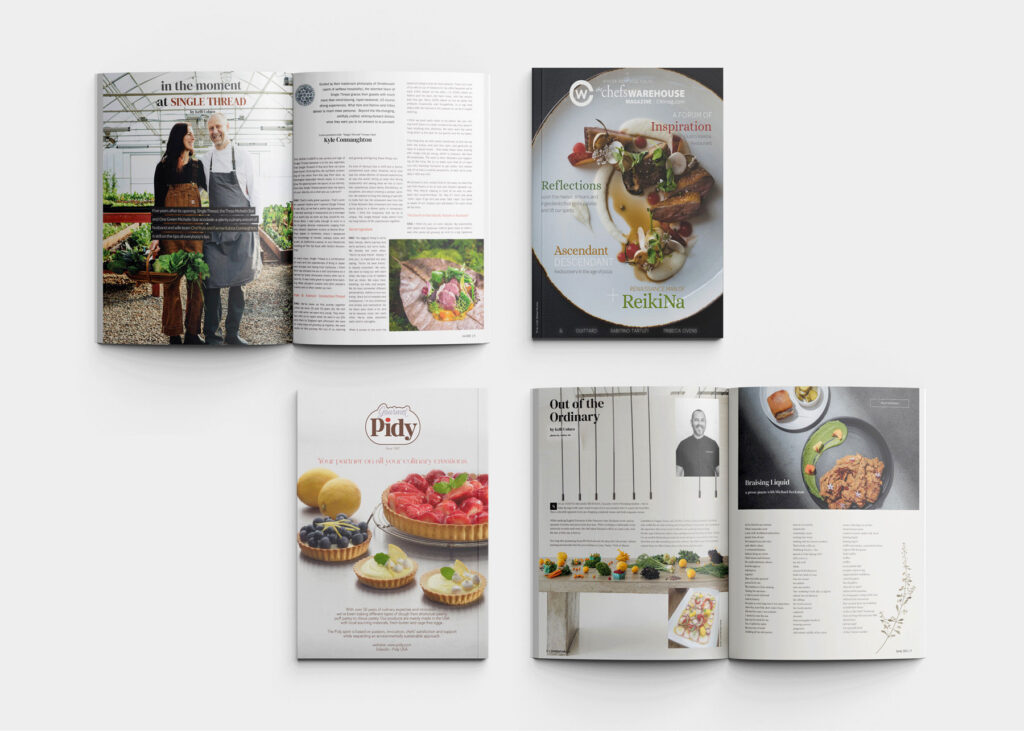
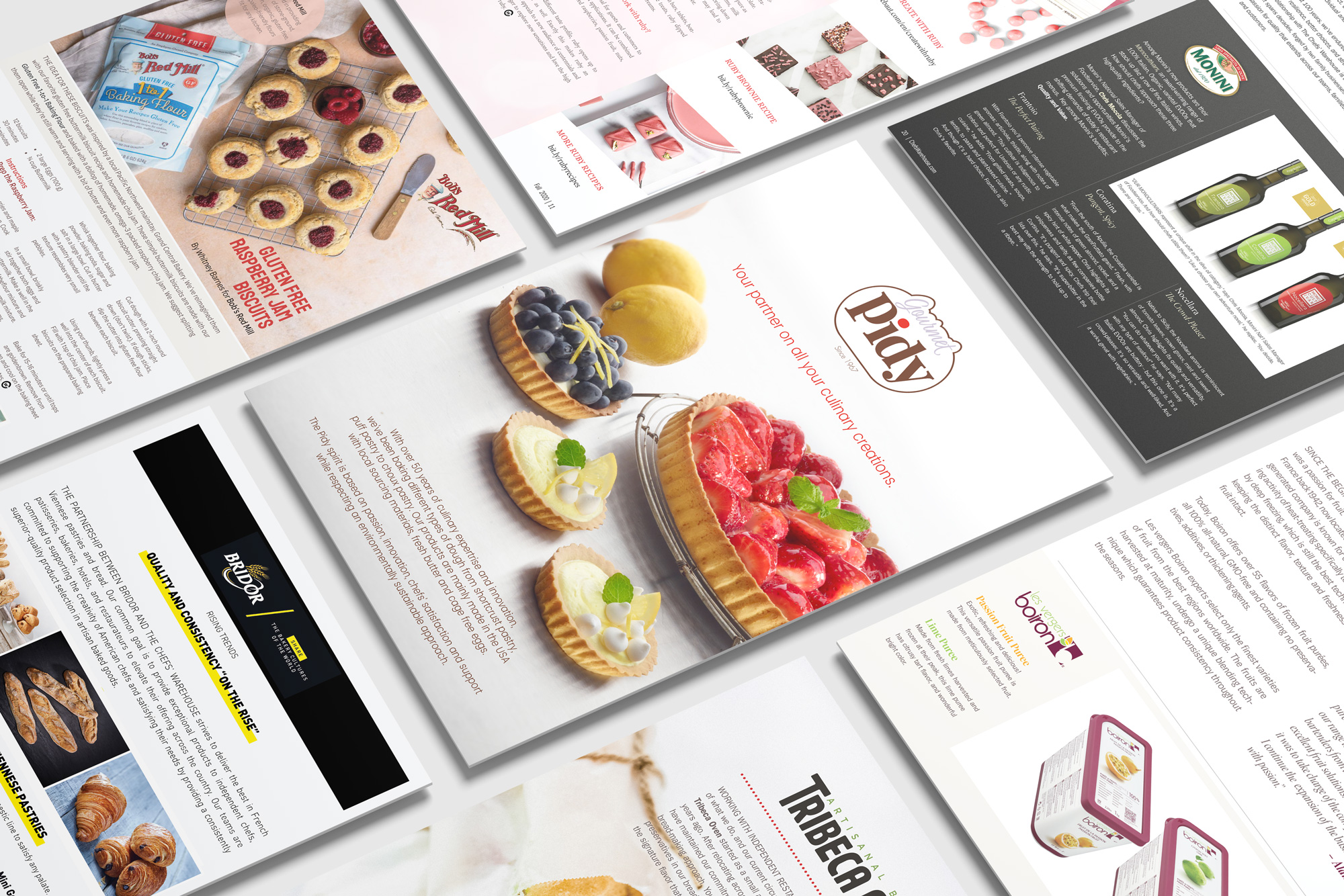
The Chefs' Warehouse Magazine covers and interior spreads
The Chefs' Warehouse Magazine and its digital counterpart, CWmag.com. Chef interviews, ingredient education, and vendor advertising in a format that reads like a food magazine rather than a catalog.
01 · The challenge

Regional voices that still sound like one company

Going public changes what a distributor's communications have to do. Corporate initiatives need one consistent voice across every market. But specialty food is a local business: the chefs in San Francisco, Texas, and Calgary care about different producers, different availability, and different people.

Corporate newsletters solve this badly. They flatten the regions into a single bland voice, or they fragment into a dozen unrelated efforts. And either way they cost money without returning any.

So we proposed a publication instead: real editorial, regional editions, and an integrated advertising program that lets vendor partners fund the thing that promotes them. The content program pays for itself.

02 · The magazine

Written like a food magazine, not a supplier bulletin

A chef will read a profile of another chef. They will not read a product announcement. Every issue is built on that distinction: long-form interviews, photography commissioned properly, and ingredient education framed as craft rather than as inventory.

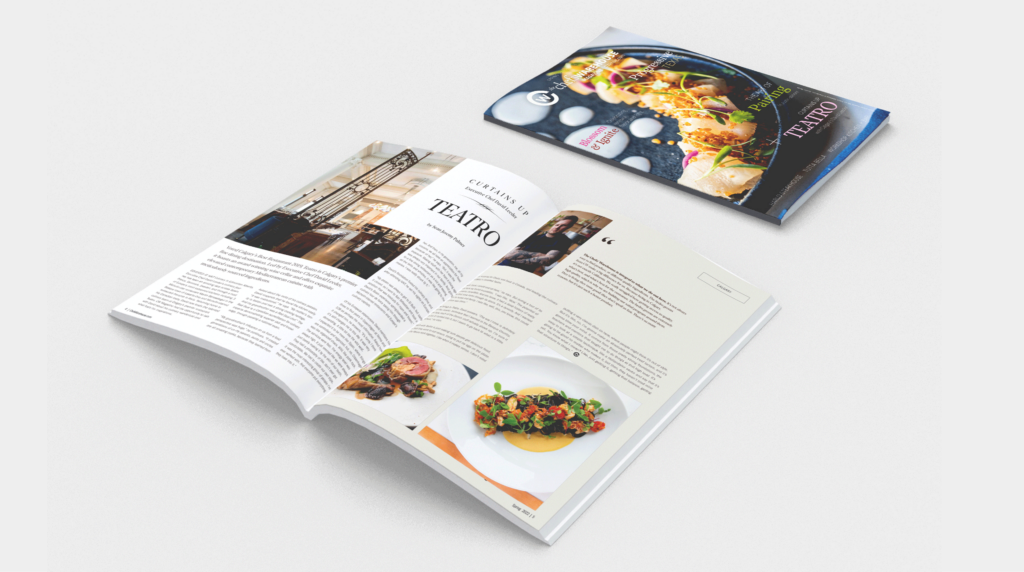
Chefs' Warehouse Magazine spread: a chef profile feature with a regional issue cover
Regional editions, one editorial standard

Content is customized across North American markets — the entire West Coast, Texas, and major Canadian markets — with the same typography, photography, and writing quality in every edition.

Chefs' Warehouse Magazine interior spread with feature typography and food photography
Editorial that earns the page count

Going from twelve pages to forty only works if there is something worth putting in them. The growth came from features chefs actually finish reading, not from padding.

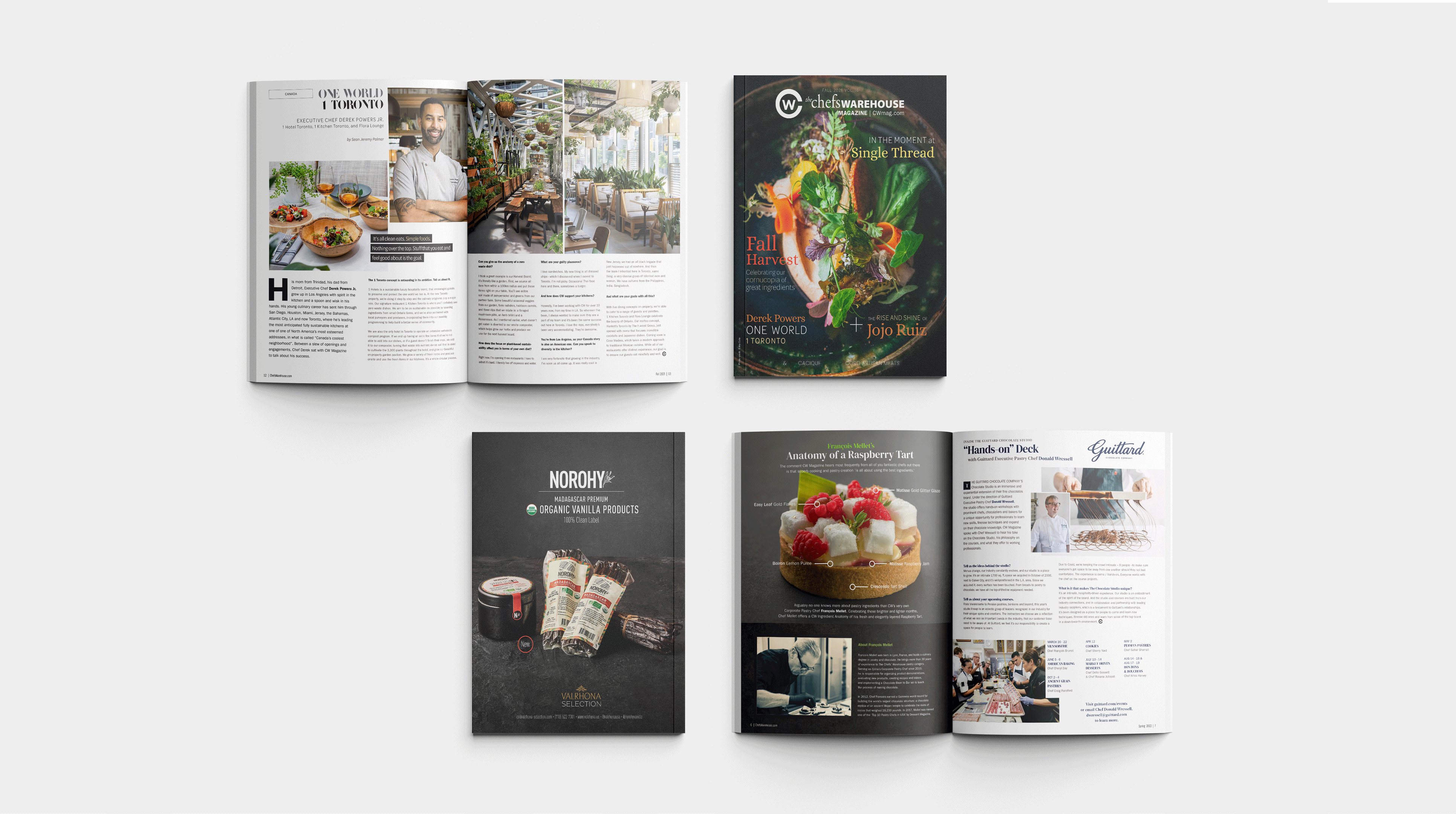
Vendor advertising pages and sponsored ingredient features from the magazine
Advertising held to the editorial standard

Vendor pages are designed rather than dropped in, so a partner's page sits next to a feature without cheapening it. That is what makes the advertising program sustainable: partners renew because their page looks like it belongs.

03 · Beyond the page

The same reporting, cut for four different attention spans

A chef interview shot properly yields a print feature, a searchable article, a video short, and a week of social. One production, four channels. That is what makes a program this size affordable to run continuously rather than in bursts.

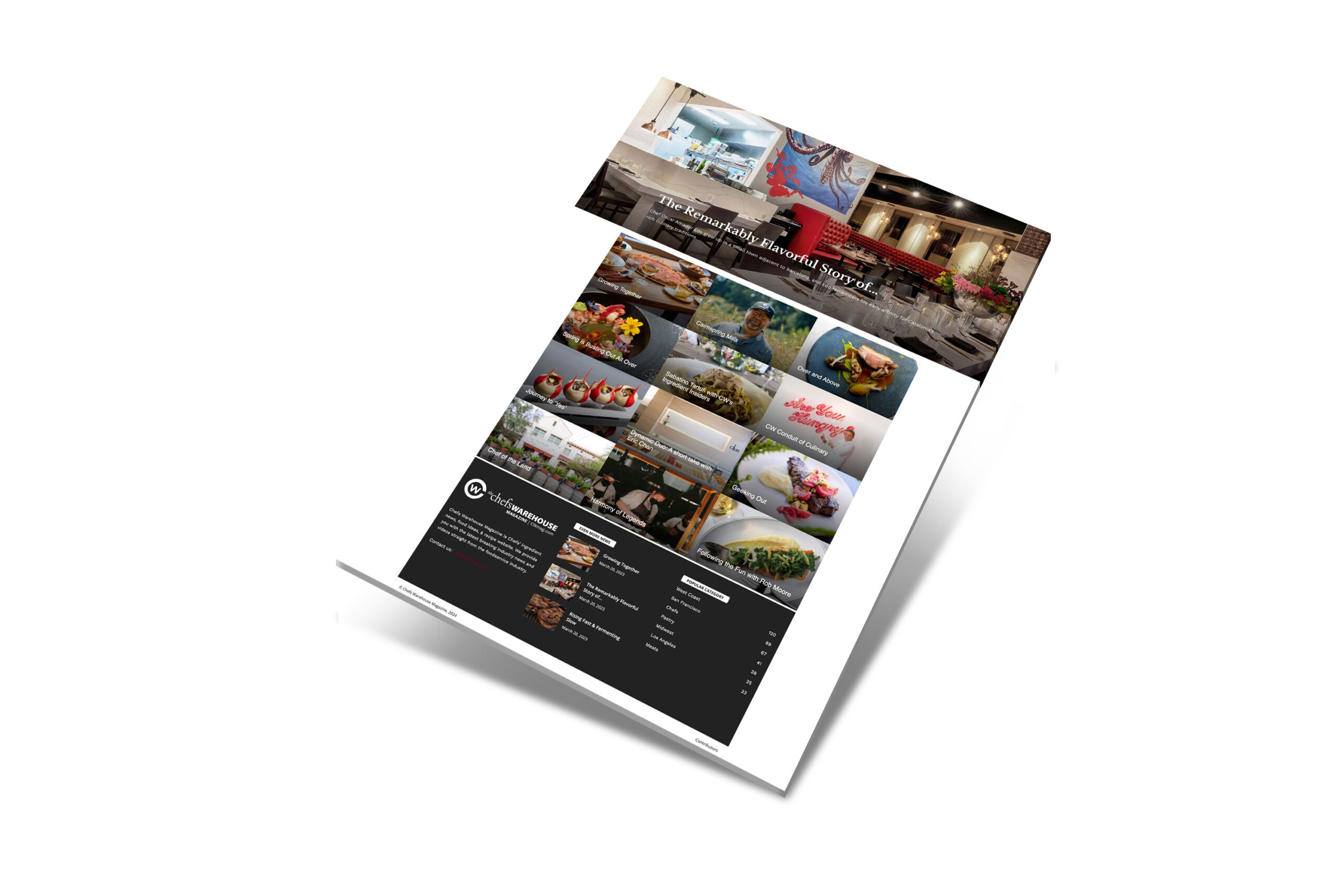
CWmag.com homepage with a tiled grid of feature stories and regional categories
CWmag.com

The digital edition carries the archive and does the search work: features organized by region and category, which is where the 5,000 percent readership growth came from.

Social cards promoting a chef feature in the magazine's red brand treatment
Video shorts and social

Dynamic video shorts, Instagram stories, and reels cut from the same shoots, with social cards pulling readers back toward the full feature rather than replacing it.

04 · Seven years of growth

What compounding looks like in a content program

None of these numbers came from a campaign. They came from publishing on schedule for seven years while the format earned its way into more regions.

1,500 → 12,870 copies

Distribution grew 857 percent as new regions came on. Each expansion was pulled by demand from that market rather than pushed from corporate.

Digital up 5,000%

Organic search does most of that work. Seven years of chef interviews and ingredient explainers is a library, and libraries accumulate traffic.

60% of the footprint

Now spanning the entire West Coast, Texas, and major Canadian markets — with room left in the remaining forty percent.

B2B and B2C at once

The publication drives professional engagement and consumer e-commerce sales, which is unusual: most trade content does one or the other.

05 · Where it stands

A publication, not a project

Beyond the metrics, the magazine has become a connection point between The Chefs' Warehouse and its community — the reason a chef takes a call, and the place a vendor partner wants to be seen.

Worth being clear about what this engagement actually is. We did not deliver a content strategy and leave. We have been the publisher for seven years: commissioning, editing, designing, and shipping every issue, in every regional edition, on schedule.

Want a content program that funds itself?

Tell us about your markets and your vendor partners. A reply within two business days.

SolarJet Pro
Established 2006 · New York · Colorado · Ukraine
© 2026 Solar Jet Productions. All rights reserved.