


Two SOFI Golds and a New York Times review for a brand that did not exist
Alili Morocco came to us with products and no brand: no name treatment, no packaging, no retail strategy, no store. We built all of it, and the US gourmet market — which had no established premium Moroccan brand to compare it against — took it seriously.

A category with no shelf next to it
A premium Italian oil or a French honey arrives with expectations already in place: the buyer knows the region, the price bracket, and roughly where it goes in the store. Moroccan gourmet had none of that in the US. There was no established premium brand to be measured against, which sounds like an advantage and is mostly a burden.
It means the brand has to do all the explaining itself: that argan oil belongs at a premium price, that harissa is a pantry staple rather than a novelty, that these olives are worth what they cost. And it has to do that in the two seconds a gourmet buyer spends looking at a jar.
So the brief was not an identity. It was a market entry: identity, packaging, retail strategy, trade show presence, and a store, all of which had to say premium before anyone read a word.
Luxury without the costume
The obvious route for a Moroccan brand is ornament: tile patterns, arches, heavy gold, spice-market cliché. It reads as souvenir, and souvenir does not command a premium price. We went the other way.
Designed to win a shelf, then a judging panel
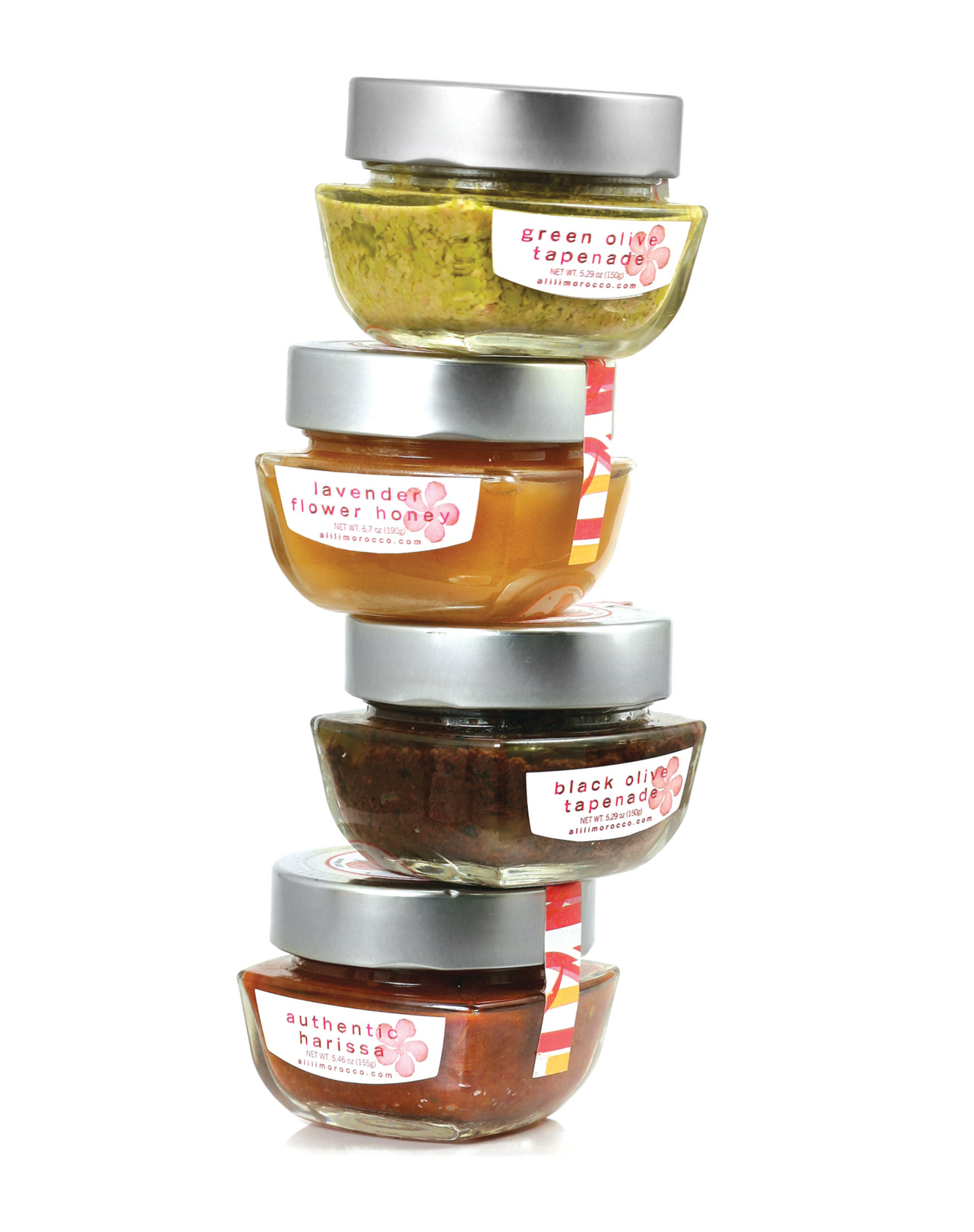
Packaging in specialty food does two jobs that pull in different directions: it has to survive a crowded shelf at a distance, and it has to reward close inspection by a buyer holding the jar. The striped seal running over the cap does the first job. The label does the second.

Four olive varieties differentiated only by the contents and one line of type. Line extensions cost nothing to design and never break the family resemblance.

The brochure a buyer keeps after the trade show, leading with the awards and the same photography discipline as the packaging.
The store, the booth, and the press kit
A brand entering a market needs all of its surfaces at once. We built the e-commerce platform, designed the trade show experience that put the range in front of buyers, and produced the materials that helped secure the press coverage.


Jubilance, The Honey Collection, and JOY are gift sets at three price points, which is how a premium pantry brand sells direct without competing with its own retailers on single jars.
One specific number does more for a premium claim than any adjective. It ran on the store, and it is the kind of line a journalist repeats.
Credibility, then distribution
Two SOFI Gold Awards established the brand inside the specialty food industry, where the award is a shorthand buyers trust. A featured product review in The New York Times — the honey line, described as earthy, unusual, and floral — did the same job on the consumer side, and coverage in Marie Claire and elsewhere followed.
Placement in premium gourmet markets nationwide came after that, in that order. For a brand nobody had heard of, in a category that did not exist on US shelves, the recognition had to arrive before the distribution could.
Launching a premium brand into a category that has none?
Tell us what you make and where you want it sold. A reply within two business days.