

A storefront whose real job is taste education
De Medici Imports, a corporate brand of Gellert Global Group, has been importing Mediterranean specialty foods since 1979. Wholesale is handled off-line. So the site cannot chase volume, and it cannot take the order that matters most.
A store that cannot rely on selling
Most e-commerce projects can be judged on conversion. This one cannot. De Medici's direct-to-consumer market is deliberately selective, and its wholesale business runs through a trade team on the phone, not a cart.
That leaves the site with a harder assignment. A retail buyer researching before they call a rep, a chef deciding whether a producer is worth carrying, a food editor checking provenance, and a consumer buying one bottle all arrive at the same pages and want different things from them.
The company's own answer pointed the way. De Medici describes taste education as its oldest tradition: knowing the story behind what is in the jar, and passing it on. We built the site around that rather than around checkout, and let the commerce sit inside it.
Magento 2, arranged as a magazine
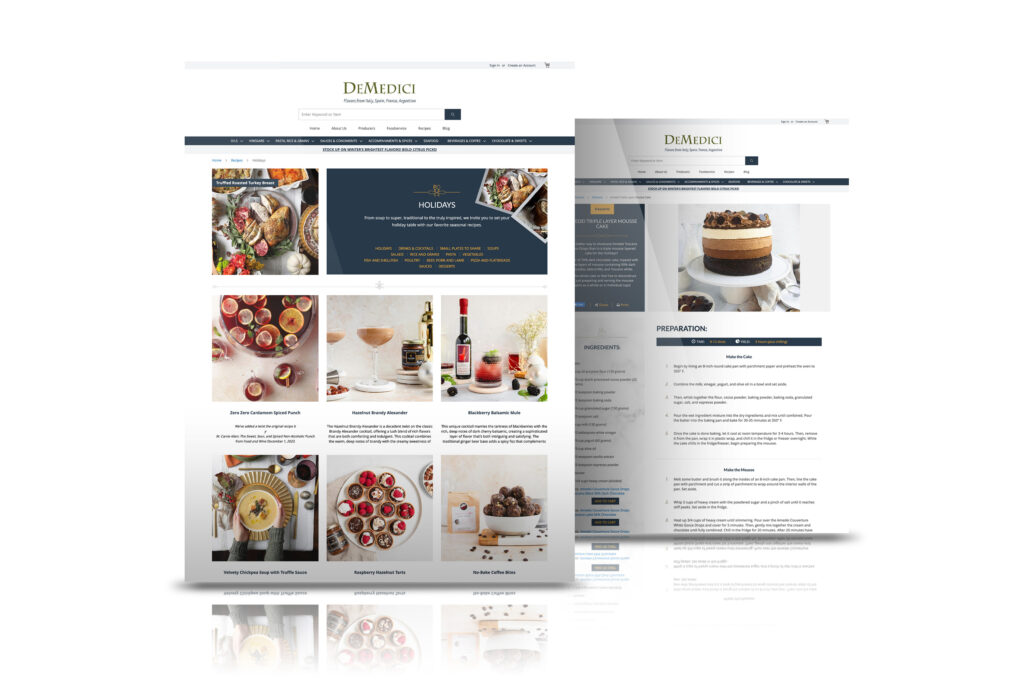
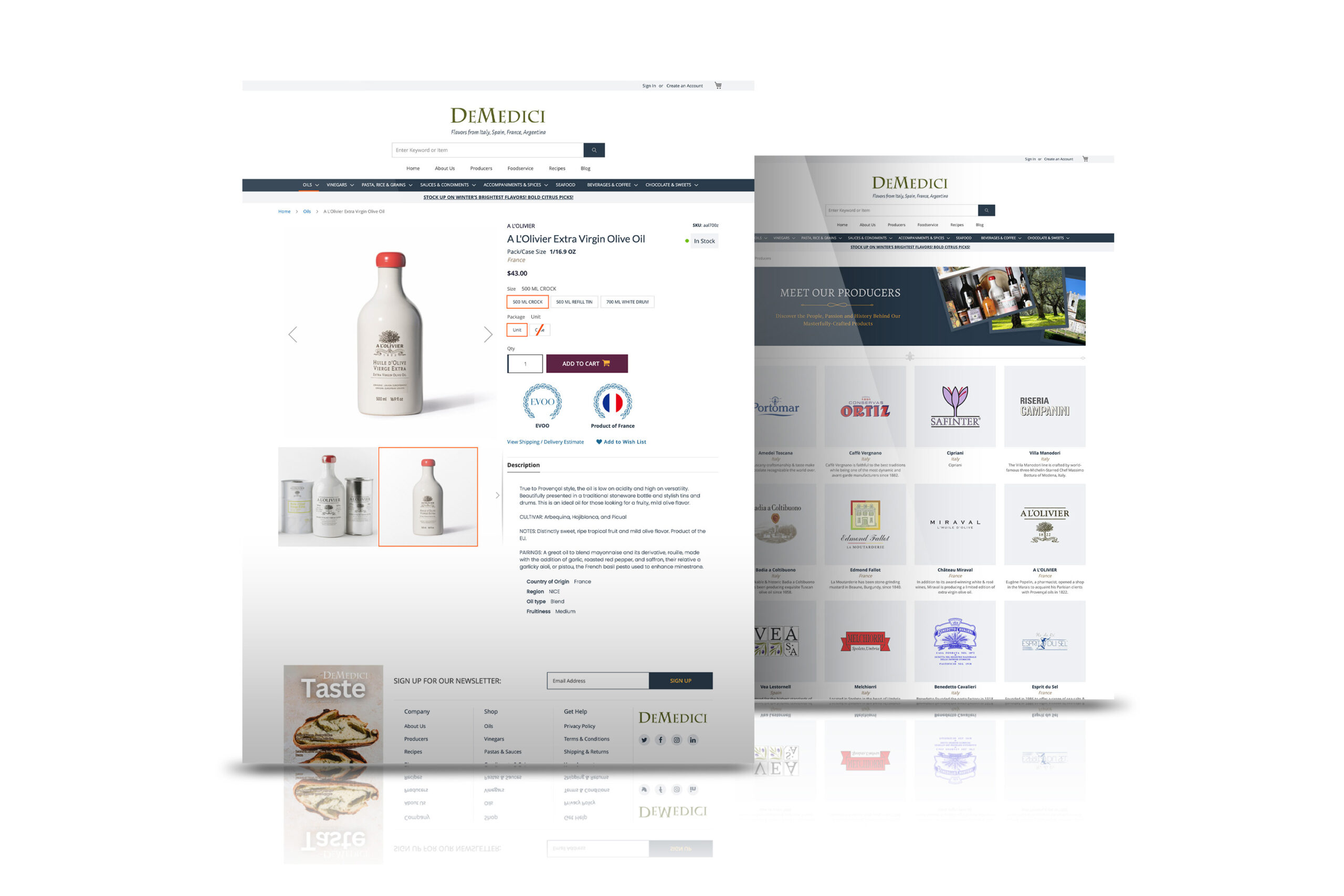
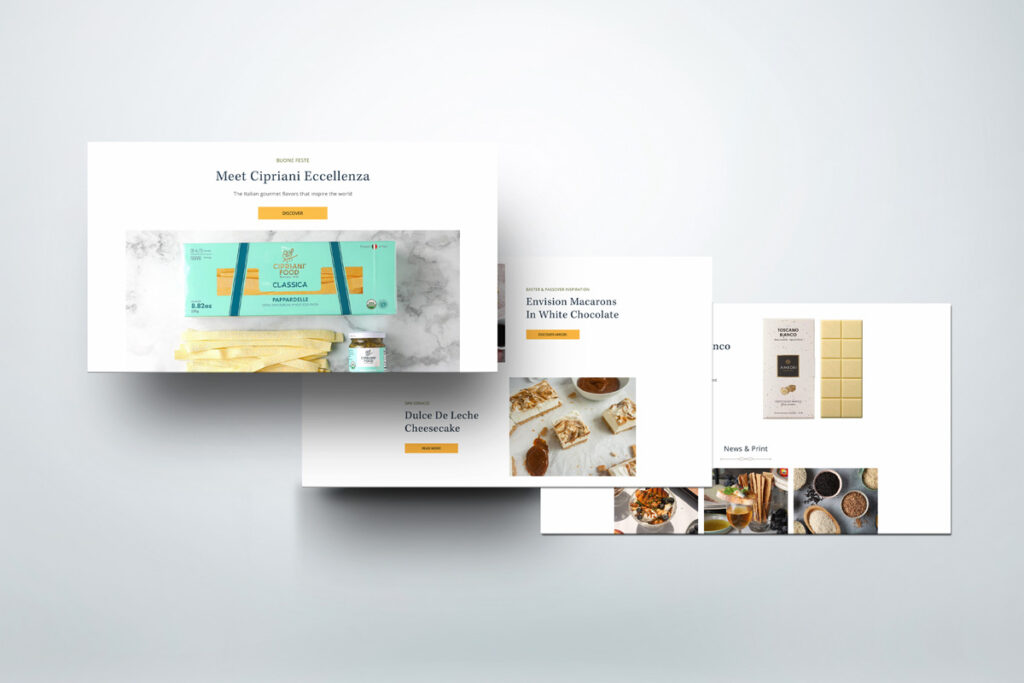
The catalog is conventional commerce underneath. What sits on top of it is not: producer stories, origin maps, hundreds of recipes, and seasonal editorial, all of which make the products legible to someone who has never heard of the brand.
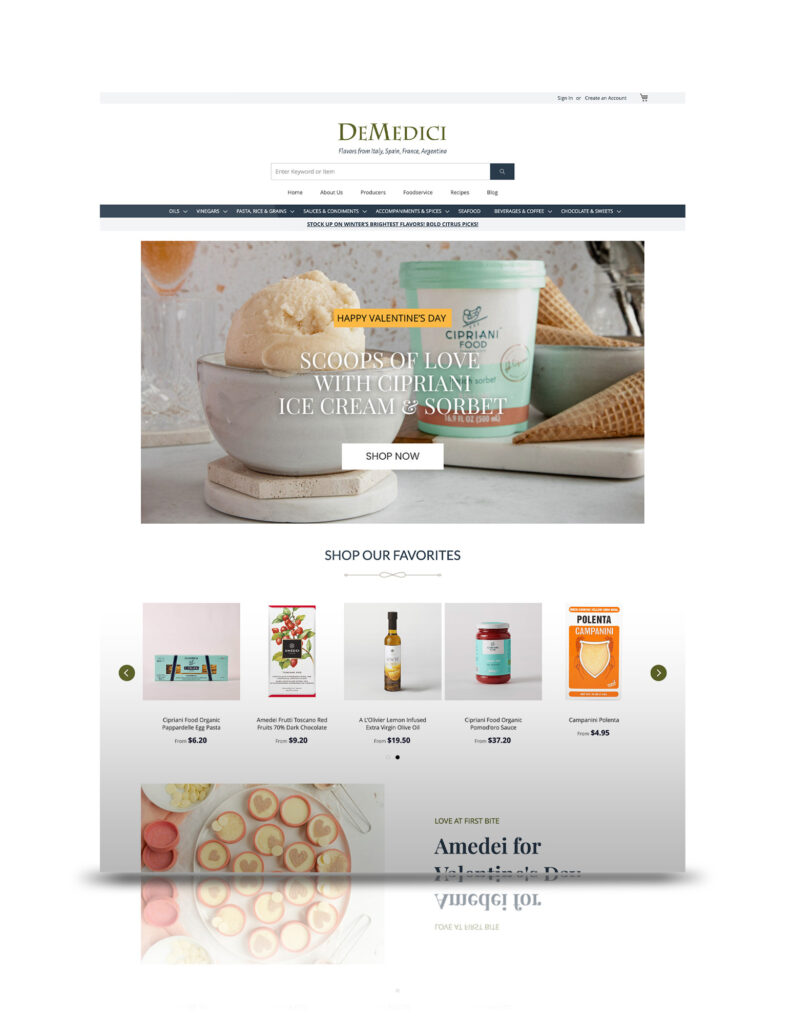
Category navigation sits across the top for people who know what they want. Below it, a rotating selection of seasonal recipes, because most visitors do not arrive knowing what a Badia a Coltibuono olive oil is for.
The Amedei Toscana page runs from the building in Pontedera through the story, the values, an origin map of the cacao, the awards, and only then the products. This template is applied across all producers on the site.
Forty-five years of curating, 25+ sofi Awards, six origin countries, and the first Tuscan extra virgin olive oil brought to America, in 1979. It closes on the Gellert Global Group relationship and De Medici's place in it.
For a consumer, this is inspiration. For a buyer, it is a demonstration of what the product is used for and who it is for. Same content, two audiences, no duplication.
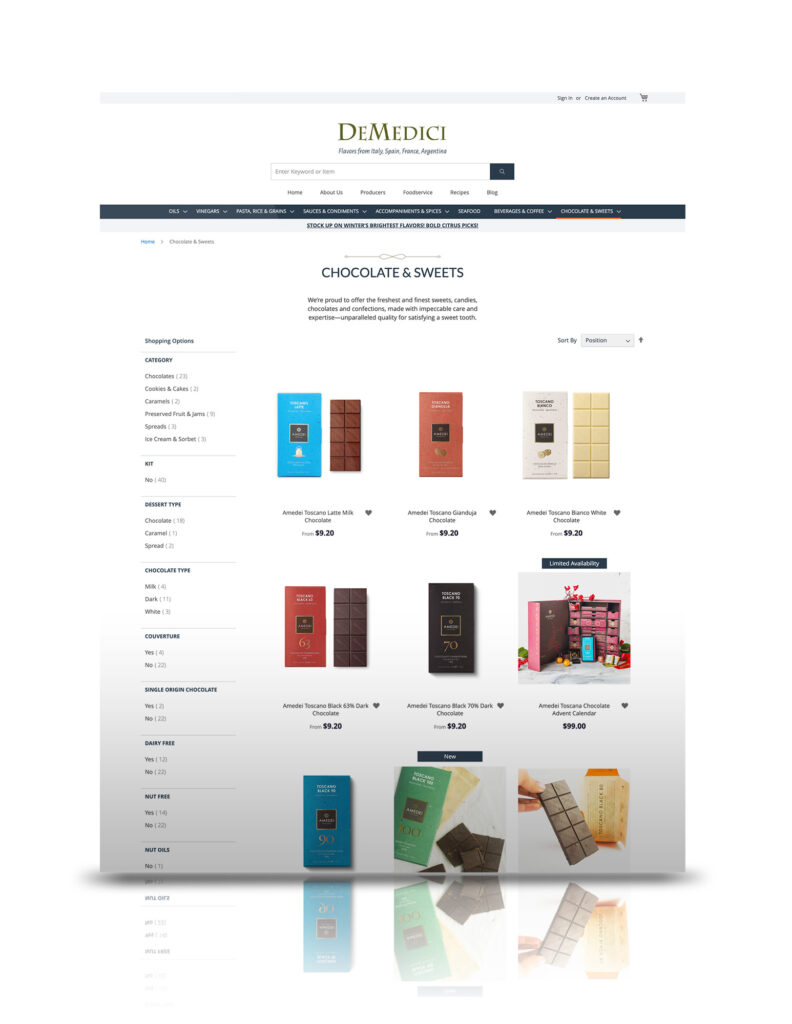
Filtering and browsing behave the way anyone expects, but each category carries its own context so a grid of unfamiliar Italian labels is navigable by someone who is new to it.
Valentine's Day and the holidays get their own designed pages with their own palette, pulling from the same catalog. This is the direct-to-consumer side working hardest, and it is where the editorial approach pays off.
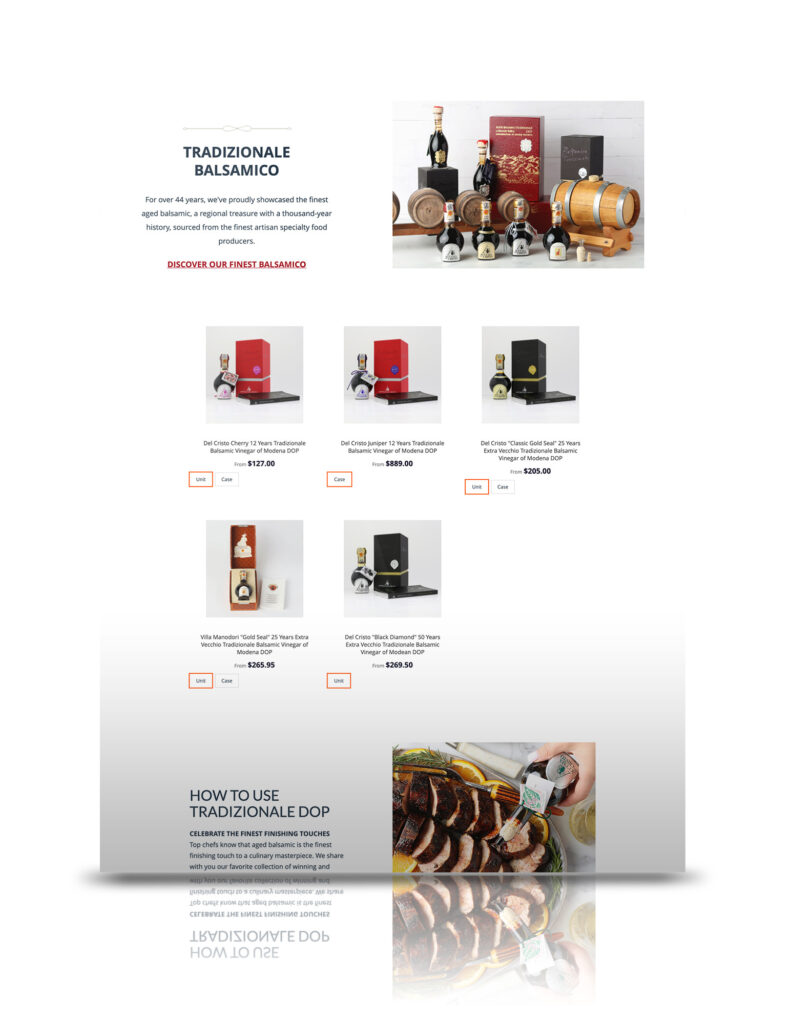
In a category where the difference between an eight-dollar vinegar and an eighty-dollar one is invisible in a product grid, the photography has to carry the difference.
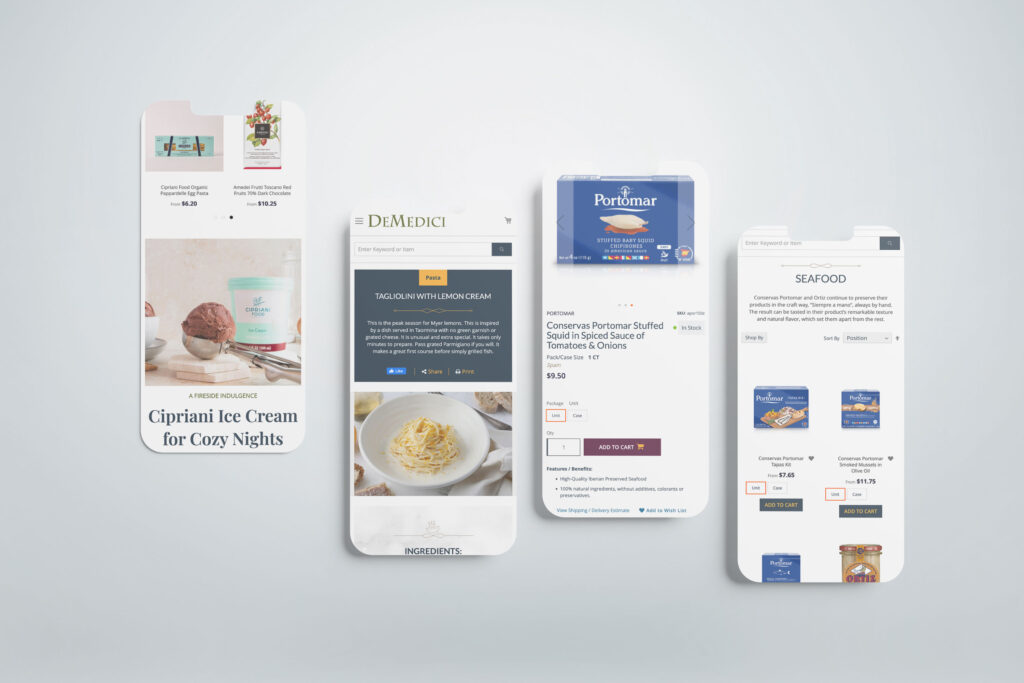
Buyers and chefs look things up mid-conversation. The editorial layouts had to survive the narrow column, not be stripped out of it.
Origin, producer, and application sit alongside the specification, so the page answers a buyer's questions and a cook's in the same layout.
Designing the handoff to a human
Because wholesale closes off-line, the site's most valuable action is not a checkout. It is a buyer reaching the trade team already convinced.
So every producer page ends the same way: a direct panel asking whether the reader is interested in carrying the brand, with the wholesale address and a route to the trade team. It sits after the story, the origins, and the awards, at the point where someone has read enough to want it. The same invitation closes the About page, aimed at specialty retailers and foodservice buyers.
Treated as a design problem rather than a contact form, that handoff is what makes an educational site commercially useful.
Growing, and still being built
Within the constraints of a selective direct-to-consumer market, sales have grown year over year for two consecutive years.
The less visible result is the one the client uses daily: the site works as a digital product catalog and an education resource for retail partners, chefs, and press, which is what a company selling unfamiliar imported goods actually needs from it.
We have been on it since 2019. The producer page template and the About page are recent redesigns, and the seasonal campaign pages are built fresh each season.
The same family of companies
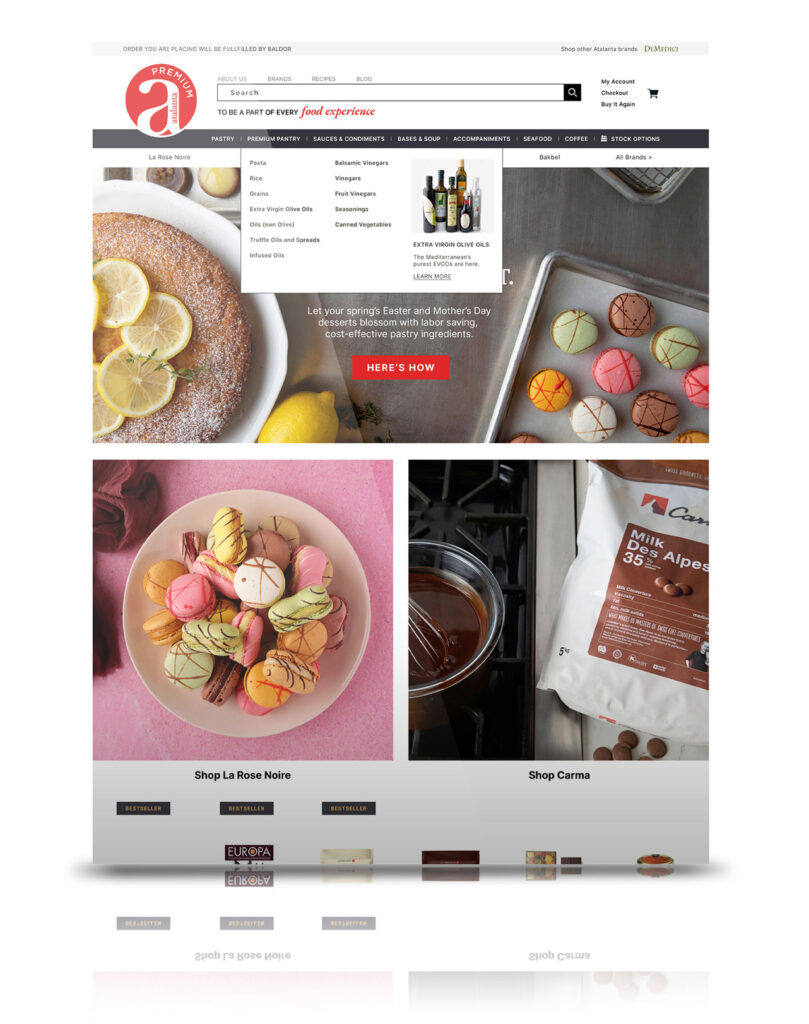
De Medici joined Gellert Global Group in 2007 and integrated with Atalanta Corporation in 2015. We work with both, on very different problems: De Medici's is presentation and education, Atalanta's is catalog arithmetic at 5,500 items.
More work
All case studies →
Orchestrating digital presence for America's largest private food importer
Creating institutional memory that scales for a national food importer
Energizing a public utility's visual identity while mastering ADA compliance
Transforming industry expertise into compelling B2B content
Selling something a buyer has to be taught to want?
Tell us what you are working with. A reply within two business days.