


Your customers order in cases, on terms, at their own price.
Retail platforms assume one price, one unit, and one customer type. Foodservice does not work that way. We build commerce sites that handle contract pricing, case and unit ordering, split shipments, and reps ordering on behalf of accounts — then connect them to the systems that already run your business.
Food distribution breaks standard e-commerce
A restaurant buyer, a regional chain, and a home cook cannot see the same catalog at the same price. Your chef customer orders four cases and expects them on Thursday. Your distributor customer orders on net-30 against a contract negotiated last spring.
Most platforms treat all of that as an edge case, so it ends up handled by phone, fax, and email — and every one of those orders is retyped by someone in your office.
Customer-specific contracts, volume breaks, and promotional pricing that standard carts cannot express.
Pack sizes, split cases, and minimums that have to be enforced at the moment of ordering, not after.
Orders that have to land in the ERP, and inventory that has to be true when the page loads.
Phone and email orders retyped by staff, with the error rate and labor cost that implies.
Built for a shopper, not a buyer.
We start from how your business already sells, then build the platform around it — including the integrations, because the integration is usually where these projects fail.
Four sites, four different buyers
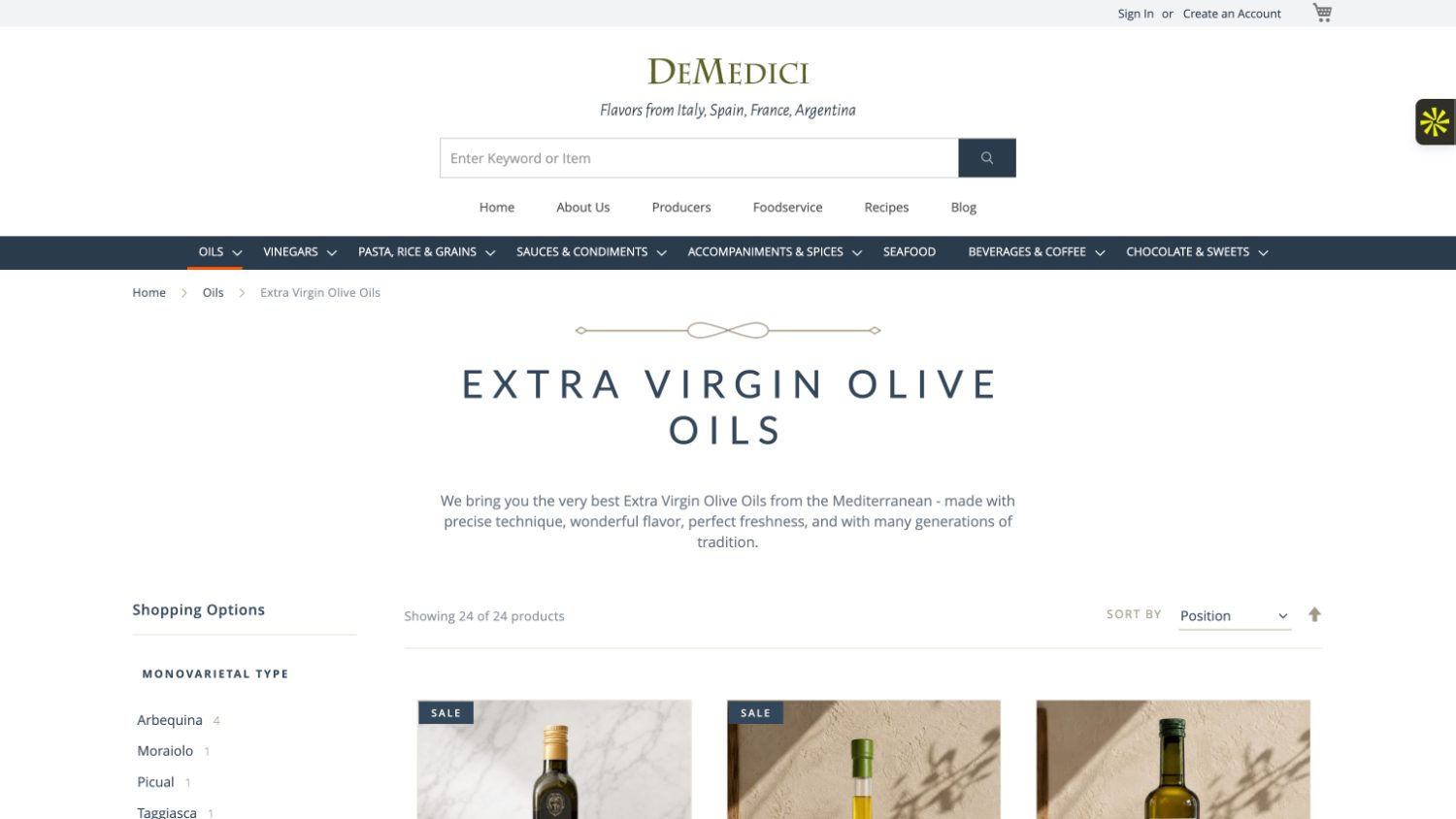
Importer wholesale, foodservice distribution, and direct-to-consumer brand retail — all running today, all built on the same foundation and shaped to a different customer.
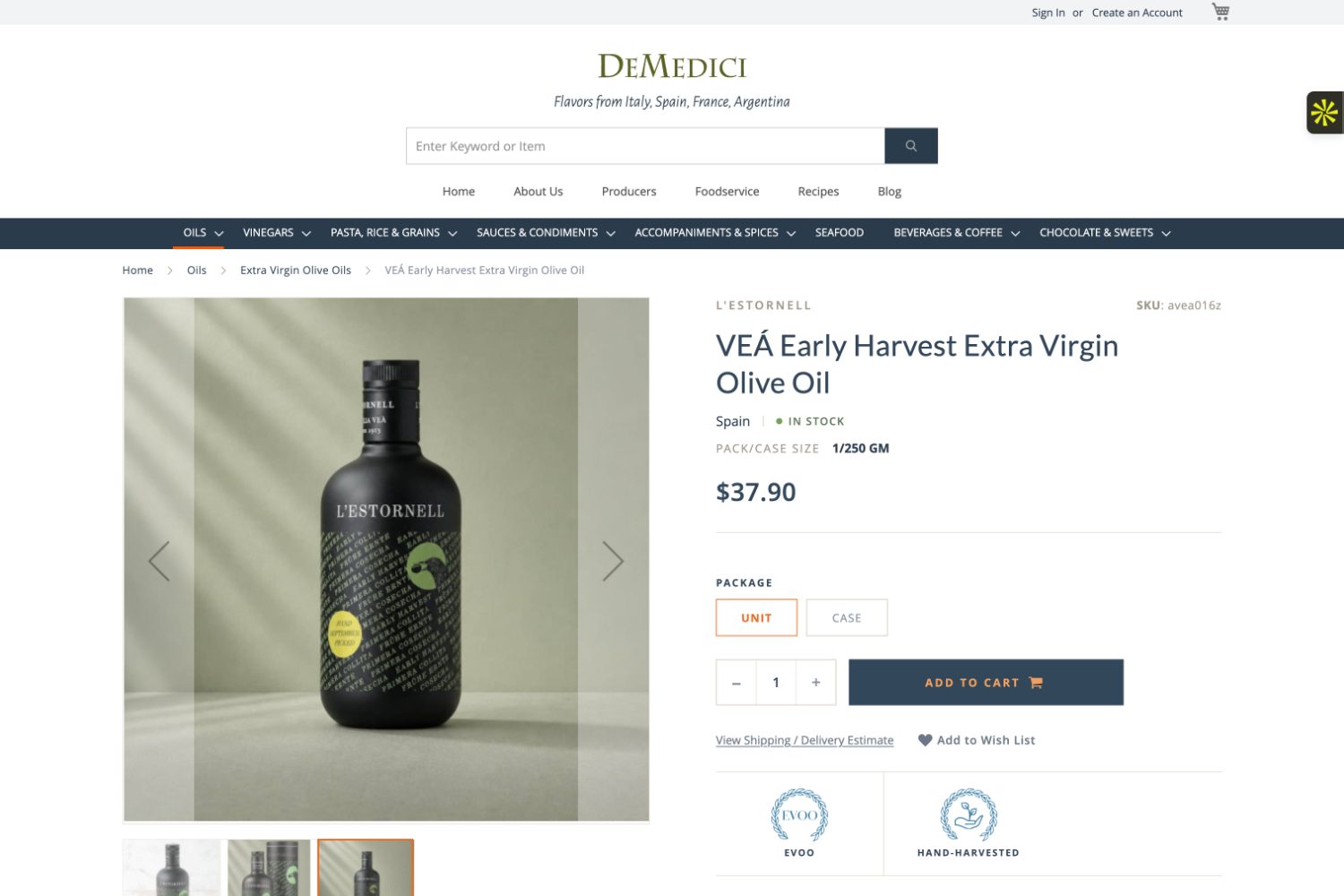
A product page a chef can actually buy from
Unit or case toggle, pack size, country of origin, region, monovarietal type, and the producer story on the same record. Shoppers filter a 24-product category by fruitiness or varietal. Every field comes from the product data, not a hand-built page.
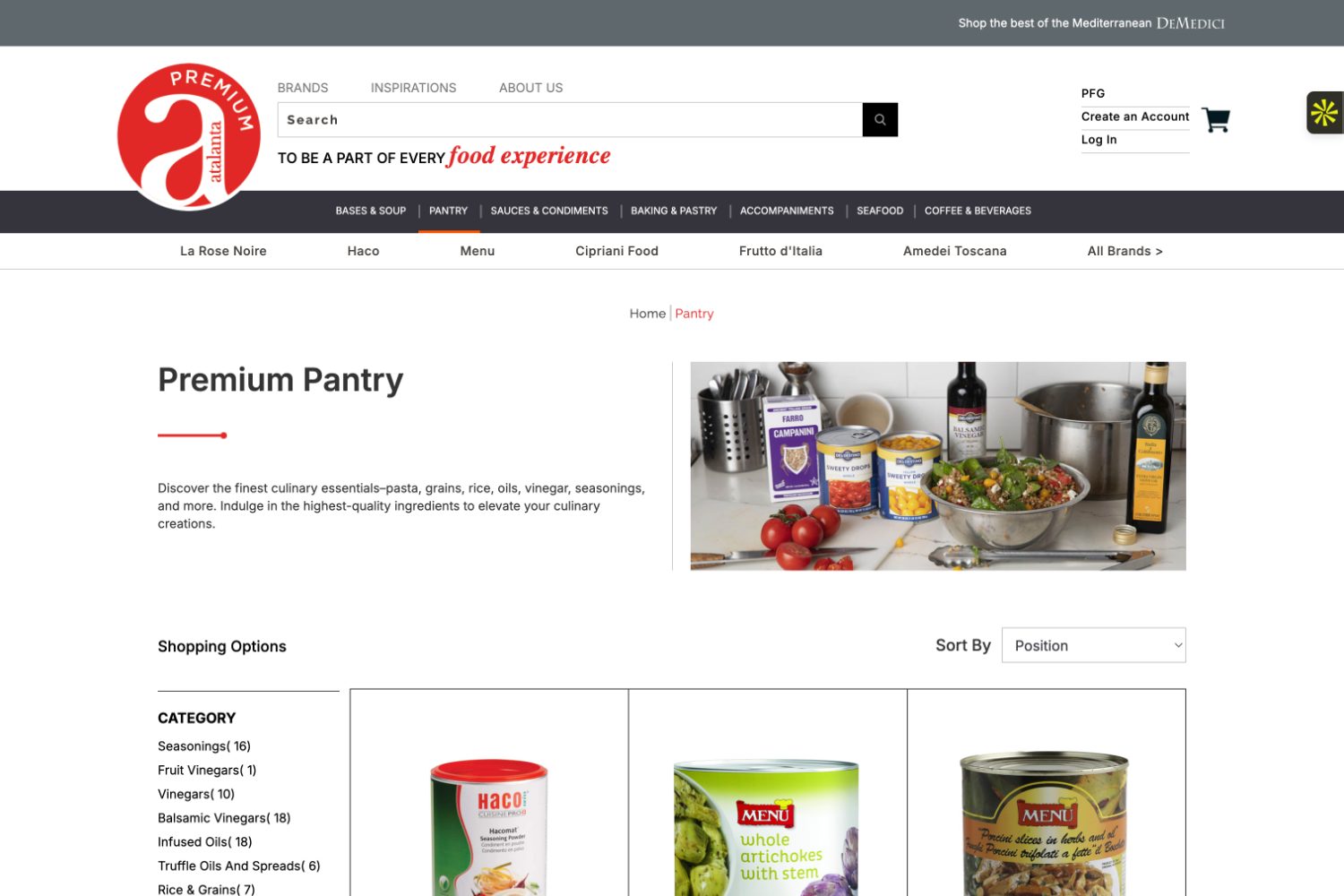
A wholesale catalog that stays honest
Hundreds of SKUs across brands, filtered by category, varietal, aging, and origin, with in-stock status and case pack on every tile. Buyers see live availability instead of calling to ask.
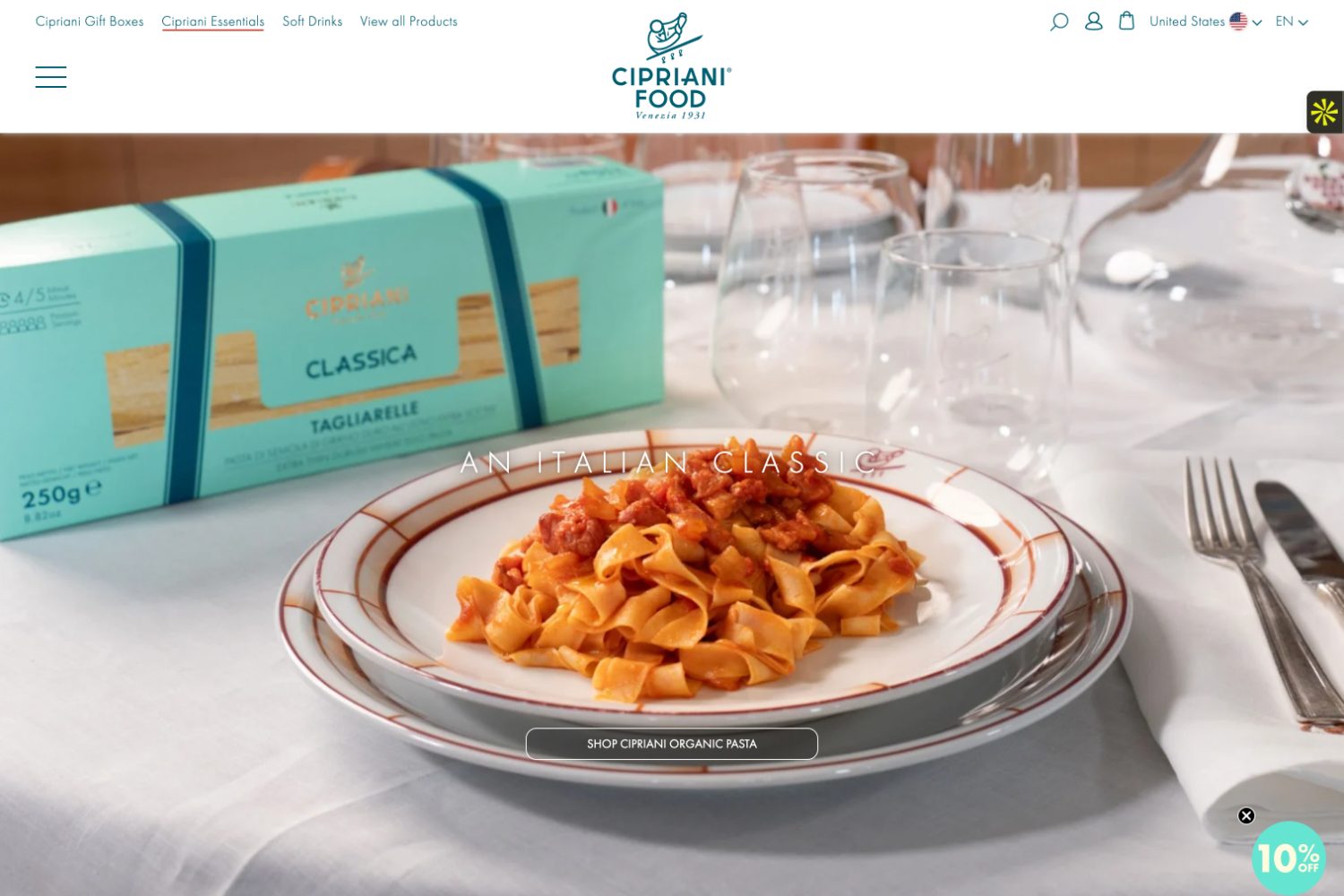
The same foundation, in a luxury brand's voice
A direct-to-consumer storefront for a heritage brand: editorial imagery, gift boxes, multi-currency and multi-language, corporate gifting and scheduled holiday shipping. Wholesale rigor underneath, retail polish on top.
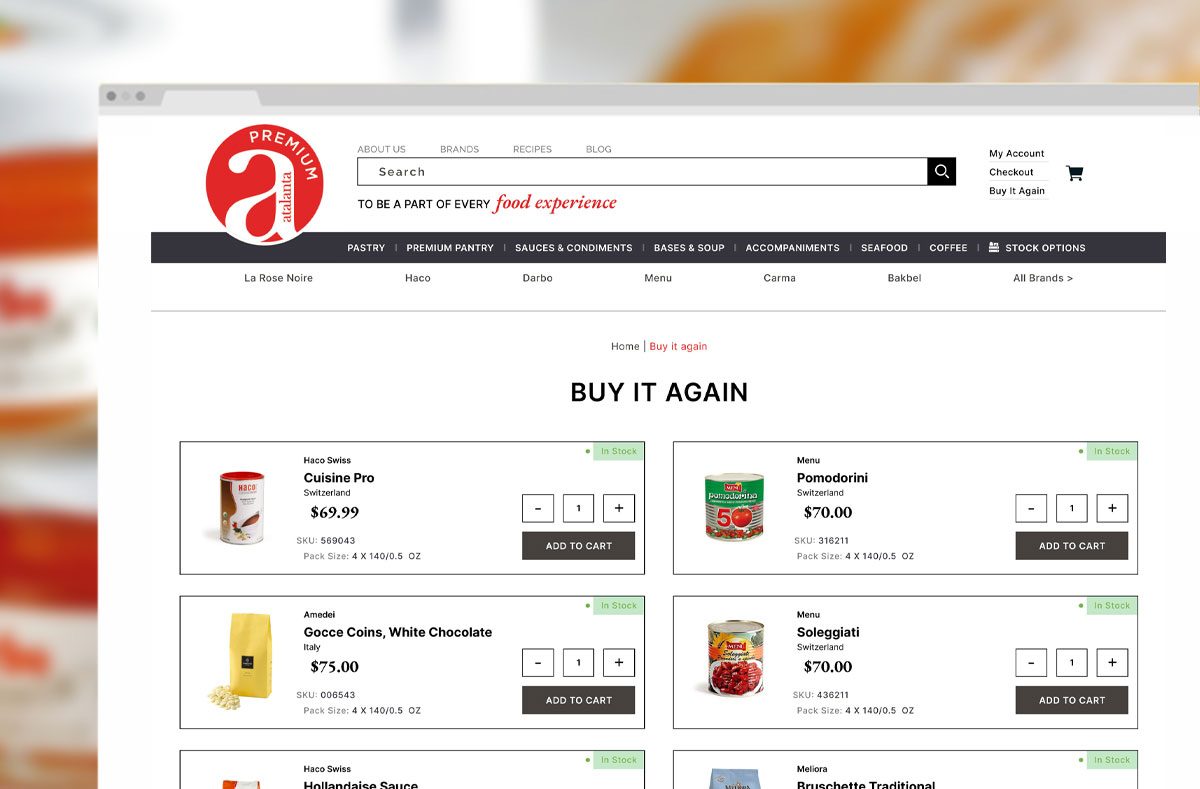
Most orders are the last order again
Buy It Again puts a customer's purchase history on one page with quantity steppers and live stock, so a weekly forty-item order takes a minute instead of a phone call. This is the single feature that moves order volume most.
Three things that move revenue
Every customer sees their own contract price, volume breaks, and payment terms. No spreadsheets, no exceptions handled by phone.
Orders post directly into your system and inventory reads back out, so nobody retypes an order and nobody sells stock you do not have.
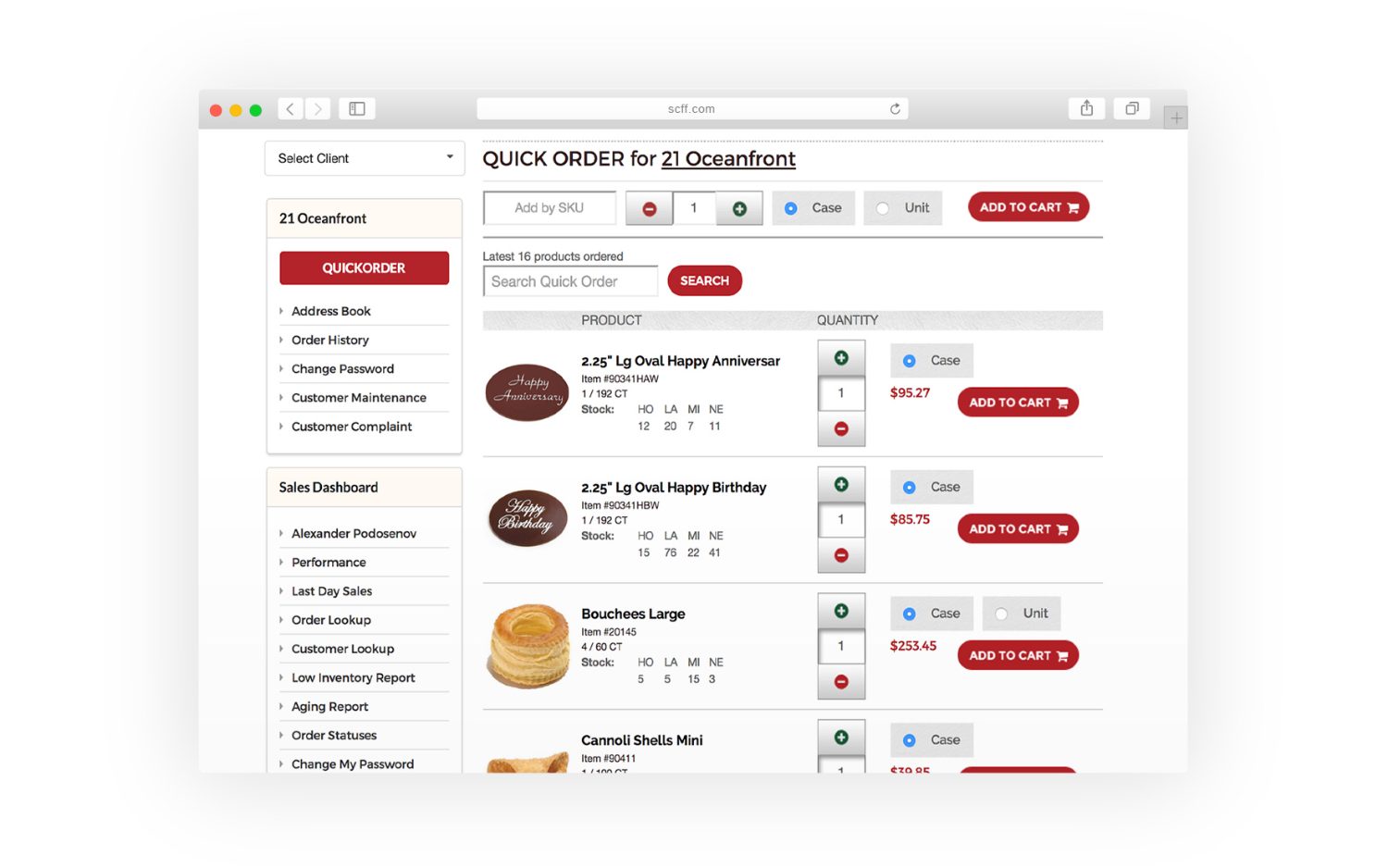
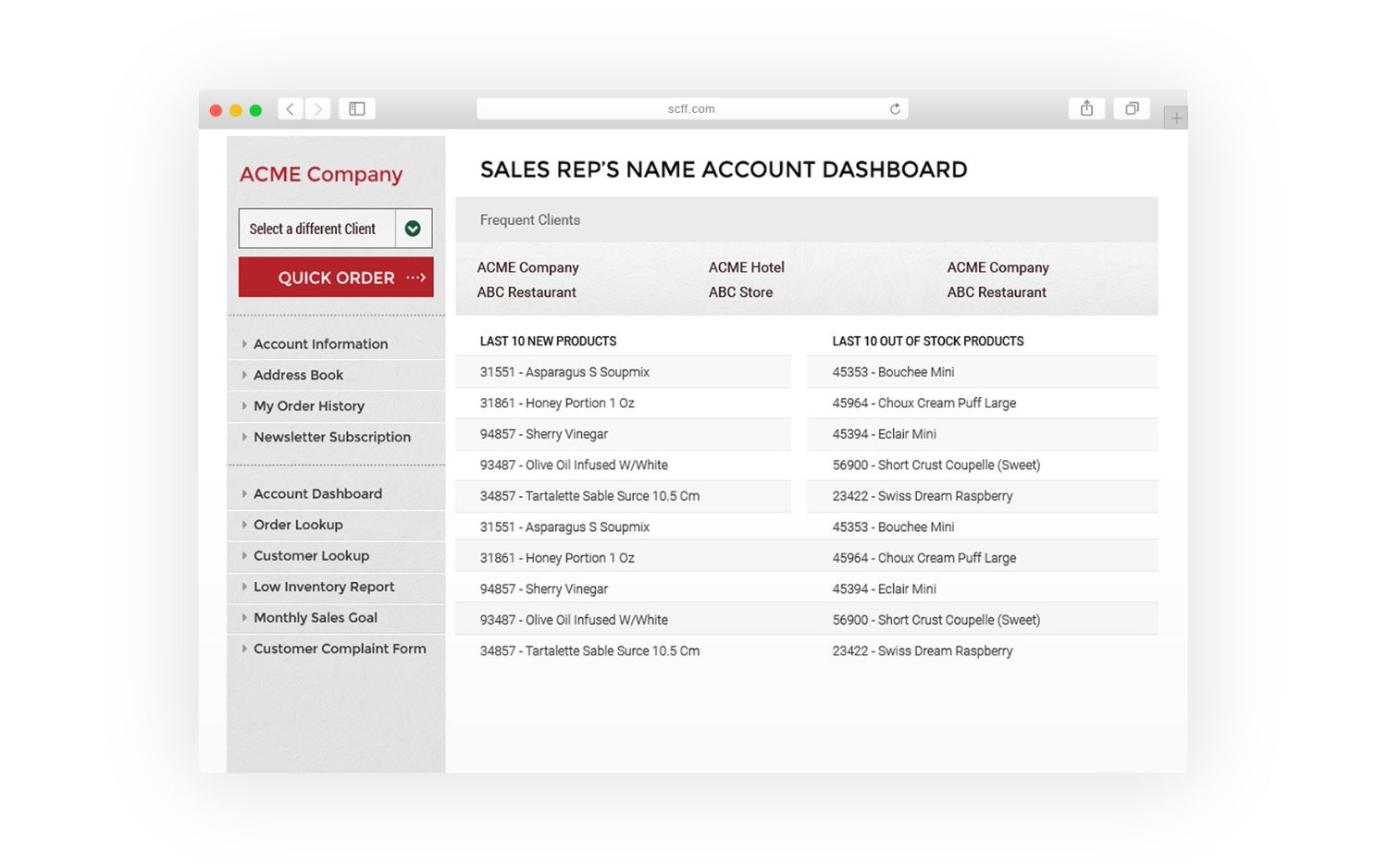
Your sales team selects a client, sees their history and pricing, and places the order with them on the call.
Pack sizes, minimums, and unit conversions enforced in the cart, not corrected afterward.
Sell across markets from one platform, with pricing and content localized per region.
Filters built from your real attributes — origin, varietal, pack, certification — not generic retail tags.
Product data, imagery, and documents flow from SolarJet PIM so the site is never the stale copy.
Order lookup, low inventory, aging, and rep performance available to the people who need them.
Platform upgrades, security patching, and new integrations handled by the team that built the site.
What happens when ordering stops being manual
Swiss Chalet Fine Foods moved its distribution business onto a platform with rep-assisted quick order, account-level pricing, and direct ERP order flow. The pattern has held across every platform we have built since.
Swiss Chalet Fine Foods has since been consolidated into Atalanta Premium, which runs on the same platform today.
Five stages, no surprises
We map how you sell today: customer types, pricing rules, systems, and where orders currently come from.
Platform selection, data model, and integration plan, sized to your catalog and volume.
Storefront, pricing engine, and ERP connections built and tested against your real data.
Migration, rep and customer training, and a staged rollout so nothing stops shipping.
Ongoing engineering, conversion work, and new capability as the business grows.
Tell us how your customers order
A 45-minute consultation on your pricing rules, systems, and order volume. You will leave with a straight answer on what your platform would need to do and roughly what it takes.