


A shared server folder held the product knowledge of a $1.7B group
Gellert Global Group is one of the largest importers of food products in the United States. Eight divisions, more than 4,000 products, and no single place any of it lived. We built the platform that became the place — and two years on, 108 people across seven divisions work in it.
Knowledge that left when people left
Eight divisions had grown by acquisition, each with its own product lines, its own brands, and its own way of describing them. Product information lived in a shared server folder, in email threads, and on individual desktops. Files were deleted. Assets were duplicated in four places with no way to tell which was current.
The commercial alternatives priced per user. For a group this size that math is punitive in a specific way: it puts a cost on every additional person who gets access, so the people furthest from the system — sales reps, division marketers, the operations staff who field the questions — are the ones left out. A platform only the core team can use does not solve a company-wide problem.
There was also the matter of the ERPs. Each division's system of record was staying, and the new platform had to work with them rather than ask anyone to abandon them.
One data standard, eight ways of working
A custom platform rather than a licensed one, so the structure could follow the group's actual organization: enterprise-wide consistency where it mattered, division-specific control everywhere else.
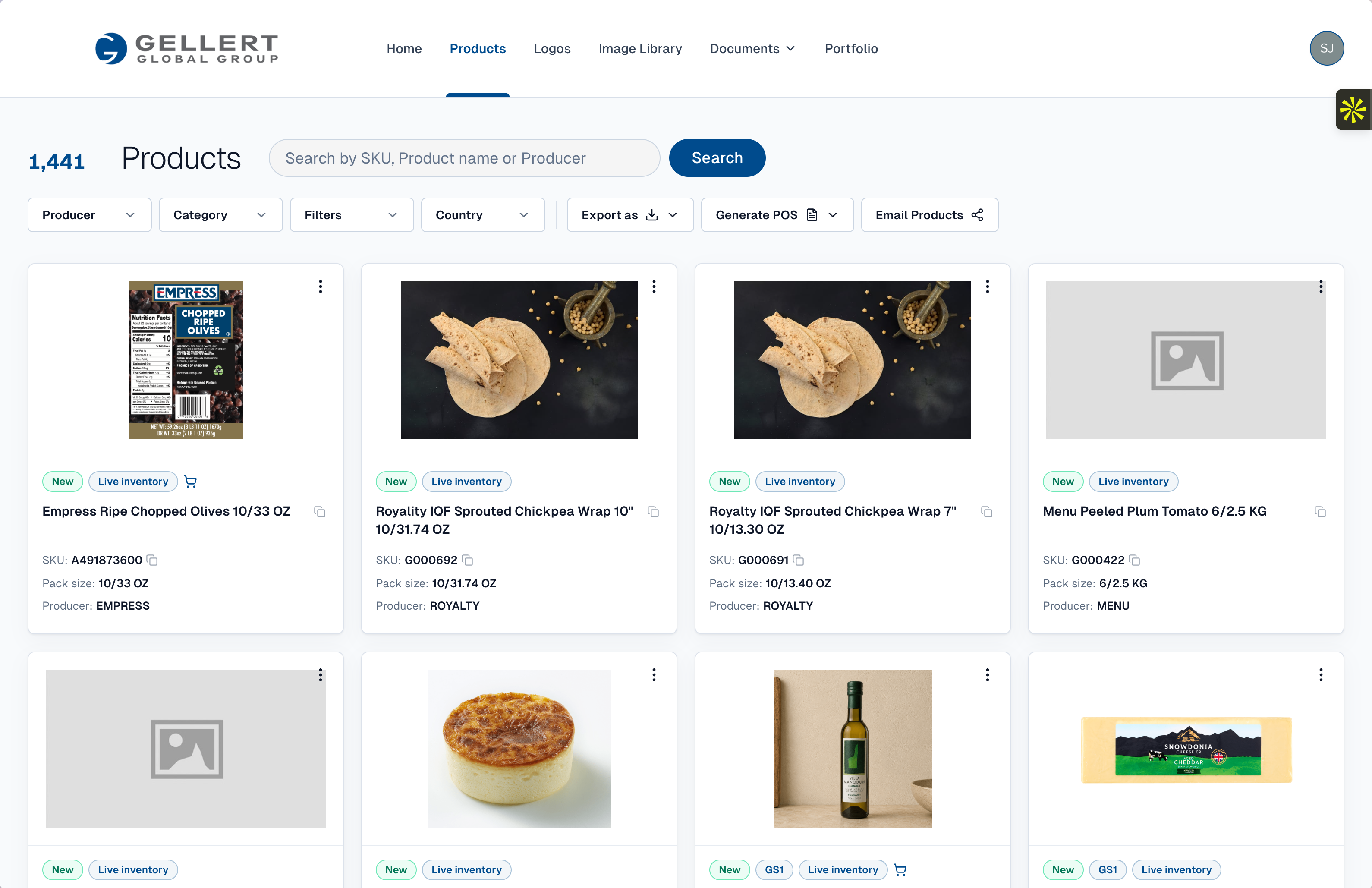
Filter by division, brand, or category and export the result. This screen is why the 669 searches matter: people look for a product and leave with the asset, without asking anyone.
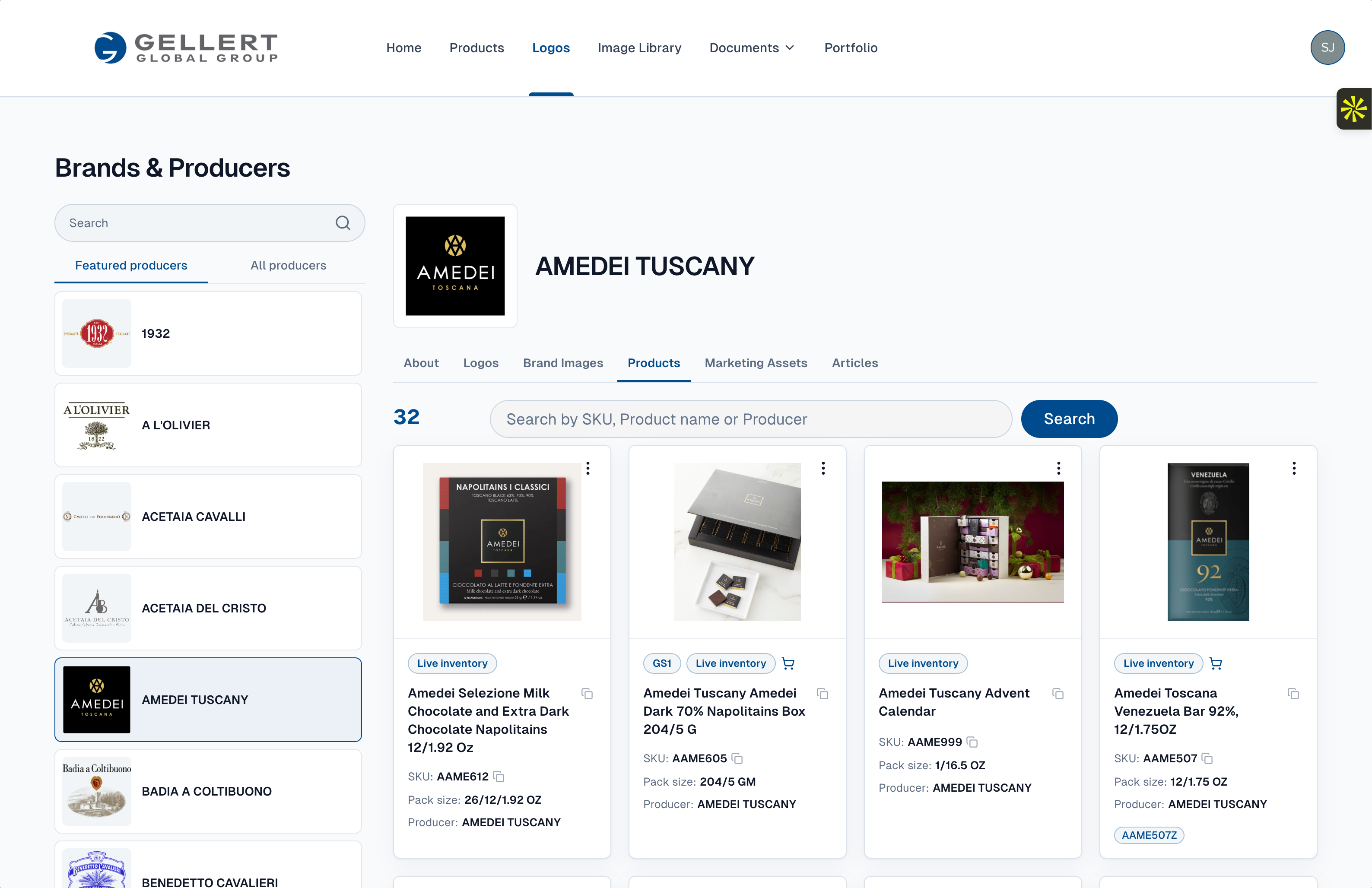
A producer's logos, imagery, product list, and marketing assets in one record. For an importer, the story behind a brand is part of the product data, not a separate file somewhere.
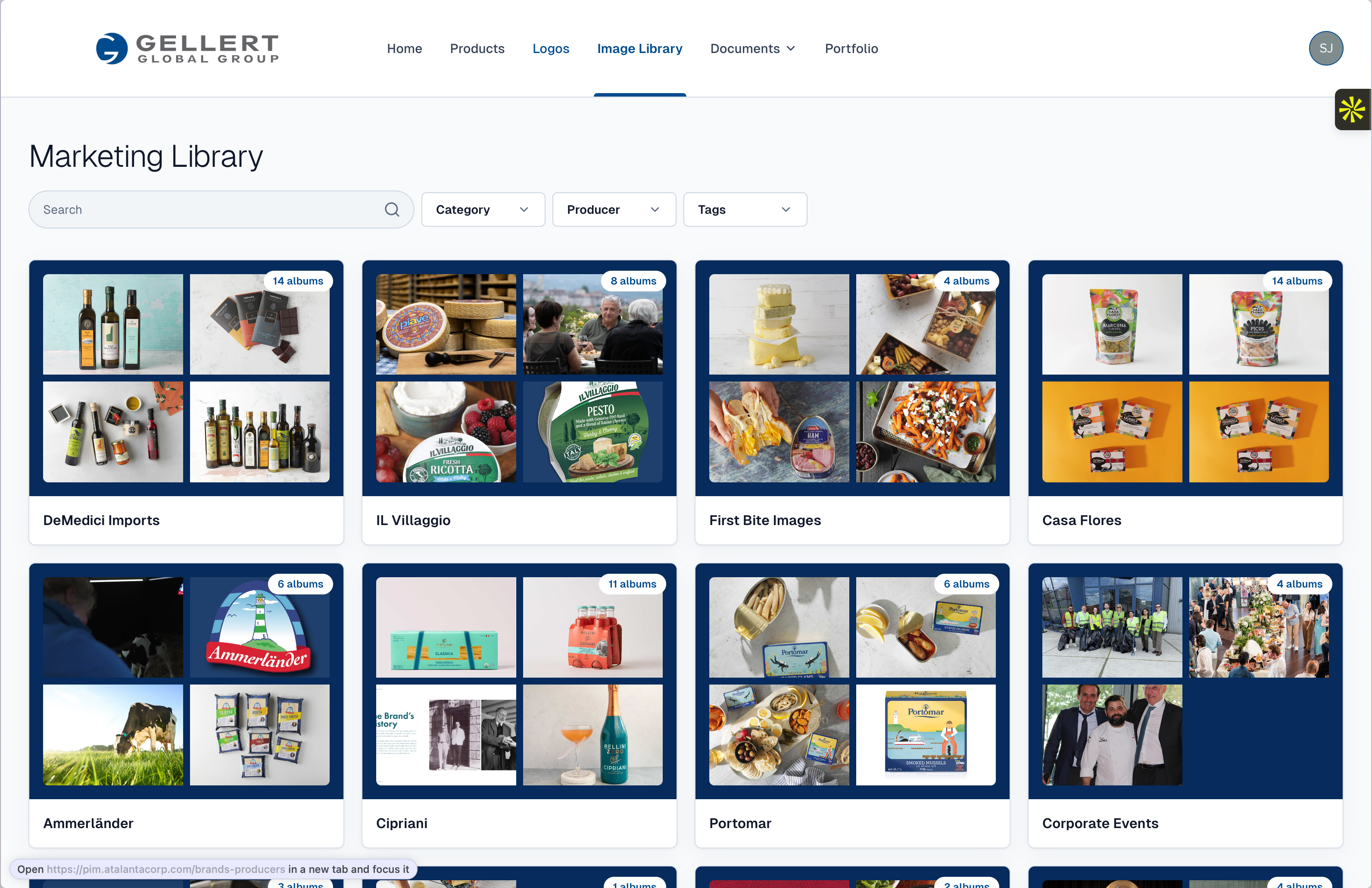
Photography organized into albums by producer, with one current version of each asset. The direct answer to work that used to disappear when its owner did.
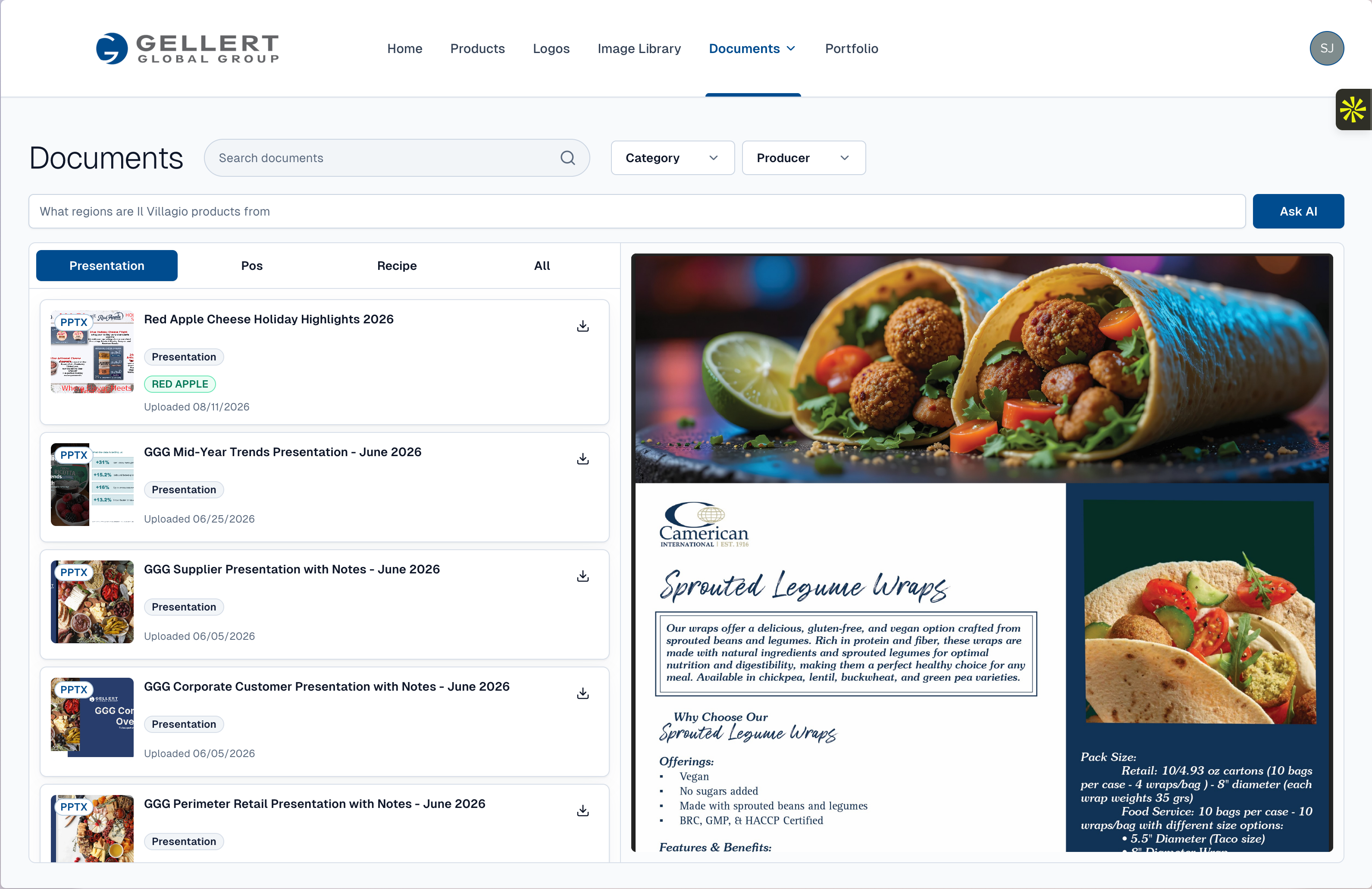
Sell sheets, specs, and certifications previewed in the browser, with AI search reading document contents rather than filenames. Added after launch, once the volume made it necessary.
“Prior to the PIM, we had a shared server folder — more like a dark hole. Files got deleted, assets lived on people's desktops, and when someone left, their work often went with them.
After two years with the system, we now have a single go-to source for everything. The marketing team uses it every day. The generated POS and PowerPoint slides are a total time changer.”
Usage is the only real measure
Internal systems fail quietly. They launch, they get praised, and six months later people are back on the shared folder because the new thing was slower than the habit it replaced. So the number we watch is not seats sold, it is whether people come back.
In a 75-day window, 108 users across seven divisions logged 1,671 sessions and nearly 10,000 page views — consistent daily and weekly usage across marketing, sales, and operations rather than a spike around a launch. They initiated 669 searches and pulled down 558 presentations, POS materials, sell sheets, and product assets, an average of more than seven downloads a day.
Those downloads are the part worth dwelling on. Each one is a sales conversation that got material without a request to marketing, and a deck that was current because it was generated from live data.
Still being built
The project never had a final delivery date, because the same team that built the platform still maintains it. Capability gets added when usage shows it is needed, which is a different relationship than filing a feature request with a vendor.
Added once the document library grew past the point where filenames were enough. Search now reads what is inside a sell sheet or spec.
POS materials and presentation slides built on demand from live product data — the feature the client singles out as the time saver.
What was built for one importer's integration problem became the PIM platform we now offer to foodservice and distribution companies of similar shape.
Is your product information still in a shared folder?
Tell us how many divisions and how many products. A reply within two business days.